HOW OWNERS DECIDE WHAT A SERVICE IS REALLY WORTH
Included or resident-supported, how owners position the service, and what each choice does to the numbers.
TWO WAYS TO POSITION A SERVICE
Included in the rent, or paid for by the residents who use it. When a property introduces a new service, one of the first decisions is where it sits inside the building’s offering. That is a strategic decision before it is an operational one.
THE TWO STRUCTURES
• Built in. Part of what living at the property means, with no separate transaction.
• Resident-supported. Available to everyone, with residents contributing to the cost of delivering it.
Neither is inherently better. The right choice depends on the property.
WHAT EACH ONE IS WEIGHING
- Asset management is asking where the value lands, in the rent line or the revenue line
- Operations is asking how cleanly the service runs inside the building, which does not change either way
- Executive leadership is asking which structure scales consistently across the portfolio
The positioning decision is where the strategy starts.
THE INCLUDED MODEL: THE SERVICE IS PART OF LIVING THERE
Explaining how some services are incorporated directly into the resident experience.
The service becomes part of what living there means. Some services never get priced separately. They are in the rent, with no transaction and nothing for the resident to opt into. This works when ownership believes the service strengthens the property’s appeal, not as a line item residents evaluate, but as part of why the building is worth choosing and worth staying in.

Plenty of things took this path.
- Fitness centers
- Resident lounges
- Package management
- Building-wide internet
None of them are pitched to residents as upgrades. They are just part of the experience. For asset management, the logic is straightforward. If a service drives retention, supports leasing, and strengthens market position, the indirect return often outpaces what direct pricing would generate. For property teams, the experience is simpler, because there is nothing to explain and nothing to sell.
Nobody sells a fitness center.
WHAT AN INCLUDED AMENITY ACTUALLY DOES TO THE ASSET
When services are positioned as included amenities, they often contribute to several important property outcomes.
The financial case for including a service isn’t always obvious at first. There’s no direct revenue line. No per-resident charge. So why do so many ownership groups choose this model? Because the returns show up elsewhere, and they tend to be larger.
RESIDENT SATISFACTION
People feel the building is worth what they are paying.
RENEWAL
Satisfied residents do not go looking at competing properties.
LEASING DEMAND
A differentiated living experience is easier to lease against the submarket.
MARKET POSITION
The building sits in a different tier in residents’ minds than a comparable property without it.

For asset managers evaluating this model, the question isn’t whether the amenity generates revenue on its own. It’s whether the amenity contributes enough to occupancy, retention, and rent trajectory to justify the cost. In most cases where the service is genuinely valued by residents, it does, often by a significant margin.
THE RESIDENT-SUPPORTED MODEL
The service pays for itself. Everyone in the building has it, and the cost sits alongside rent as part of the property's amenity offering. There is no opting out. The difference from the included model is not who gets access, it is how the economics work. Residents support the cost of delivering the amenity, so the property can introduce it without absorbing the full cost or creating a revenue gap it has to justify internally.

Technology packages, building-wide connectivity, and convenience services already run this way. They are things residents want, structured so the cost sits with the people who benefit.
For asset management, this one is interesting because it is not a trade-off. The service improves the resident experience and contributes to financial performance at the same time. For operations, building-wide means consistent delivery with no patchwork adoption to manage. For executive leadership, it scales cleanly across a portfolio.
The amenity does not have to be paid for. It pays for itself.
HOW PROPERTIES ACTUALLY MAKE THIS DECISION
There is no universal right answer between the two. Different markets, different resident profiles, and different financial objectives land in different places. Both models produce strong outcomes when the fit is right.
The included model makes sense when the service is central enough to the resident experience that making it optional would weaken the building’s appeal. If not having it would feel like a gap, it belongs in the included column. The resident-supported model makes sense when residents genuinely value the service and would seek it out themselves, and when the property is thinking about how the service contributes to its economics rather than only to its amenity story.
INCLUDED APPROACH
Works well when the service:
- Strengthens what the building offers during leasing
- Increases the likelihood a resident renews
- Positions the property clearly in its submarket
RESIDENT-SUPPORTED APPROACH
Works well when the service:
- Delivers real convenience residents value
- Aligns with how the property thinks about its financial structure
- Can be deployed building-wide without creating operational complexity
Most services work under either model. The real question is which structure fits the strategy, and which one ownership can commit to consistently.
The model matters less than the commitment to it.
WHY POSITIONING MATTERS MORE THAN IT LOOKS
The same service, positioned two ways, does not perform the same. Whichever model a property chooses, the way a service is positioned shapes how it performs for residents, for operations, and for the asset.
A WELL-POSITIONED SERVICE DOES SEVERAL THINGS AT ONCE
- Makes the building easier to choose when a prospective resident is comparing options
- Simplifies daily life for residents in ways that show up in how they talk about living there
- Reduces the operational surface area property teams have to manage
- Strengthens the retention signal asset management watches most closely

With the resident-supported model, it can also contribute directly to NOI. Positioning is not a footnote to service adoption. For asset management, this is a financial structure decision. For operations, it determines how the service is managed day to day. For executive leadership, it determines whether the model can be replicated across the portfolio.
The service may be identical. The outcome is not.
WHERE LAUNDRY FITS INTO THIS CONVERSATION
How laundry is beginning to transition from infrastructure to service within multifamily housing.
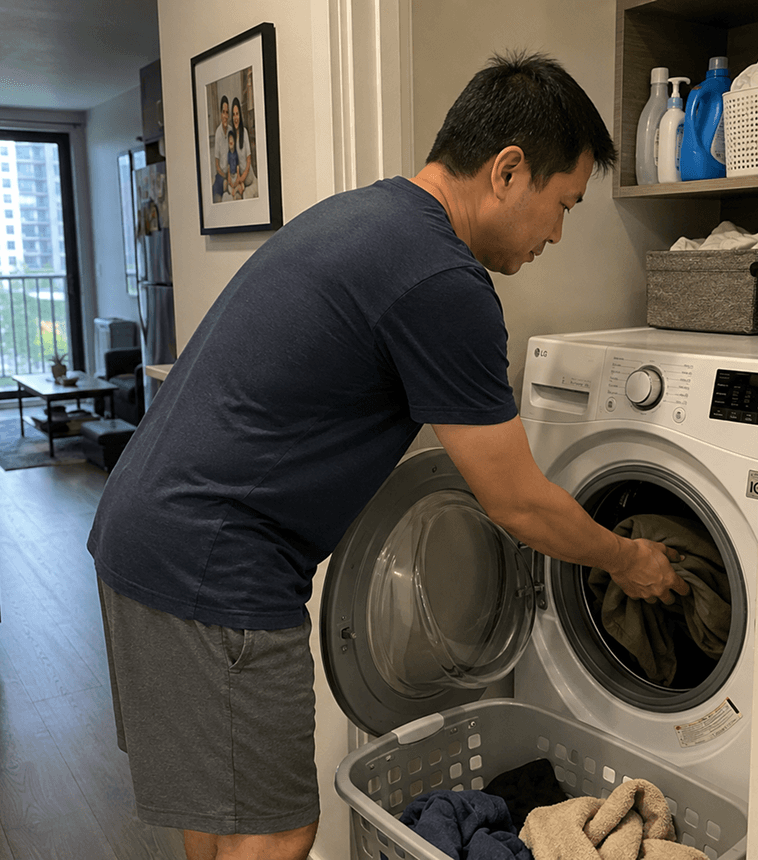
Laundry has never been an amenity. It has been infrastructure. Machines go in, residents manage them, and ownership deals with maintenance and replacement when it comes up. Laundry sat entirely outside the amenity strategy conversation because nobody thought of it as a service. That is changing.
As service-based models enter multifamily, the question moves. It is no longer what equipment to put in. It is how laundry should work for residents, and what part it plays in the building’s overall experience.
ONCE IT IS A SERVICE, THE SAME TWO CHOICES APPLY
- Included. Part of what living here means, with no separate transaction
- Resident-supported. Available building-wide, with residents contributing to the cost of something genuinely better than what the machines offered
For asset management, this changes the capital picture. For operations, it changes the maintenance and vendor picture. For executive leadership, it opens a question about how the portfolio is positioned.
Laundry finally belongs in this conversation.
WRINSY: LAUNDRY AS A SERVICE
Not infrastructure.
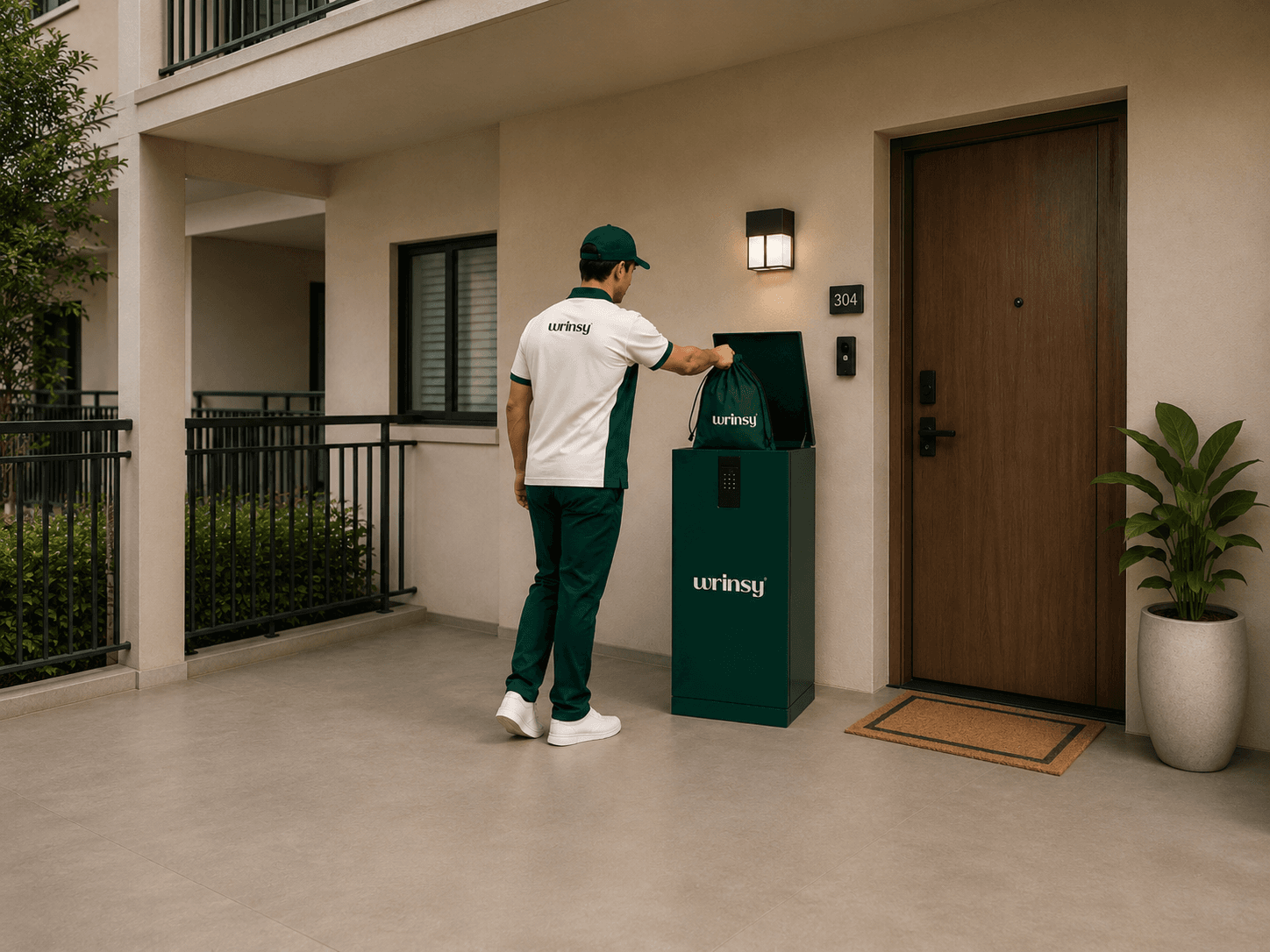
wrinsy replaces on-site laundry equipment with a fully managed pickup and delivery service built for multifamily. Residents put their laundry in the secure wrinsy box outside their door. wrinsy handles everything from there: pickup, cleaning, and next-day return. The property stays informed without doing any of the work. Both models work. The right choice depends on the property's strategy.
Included
Laundry becomes part of what the building means. A genuine differentiator in leasing conversations, a retention driver residents notice, and space back inside every unit.
Resident-Supported
An amenity residents genuinely prefer, contributing directly to the property's financial performance, while delivering an experience residents prefer over their own machines.
When laundry moves from infrastructure to service, the building gets to decide what it is worth.
Related Resources
View allWHO IS WRINSY
Laundry infrastructure replaced with a fully managed service.
HOW WRINSY WORKS
A structured pickup and return service your staff never has to manage.
FINANCIAL IMPACT
What wrinsy does to NOI, CapEx, and reclaimed space, in plain numbers.