Consistency doesn't happen by accident.
The people who handle it, and the process they follow every single time.

WHY PEOPLE AND PROCESS ARE THE STORY
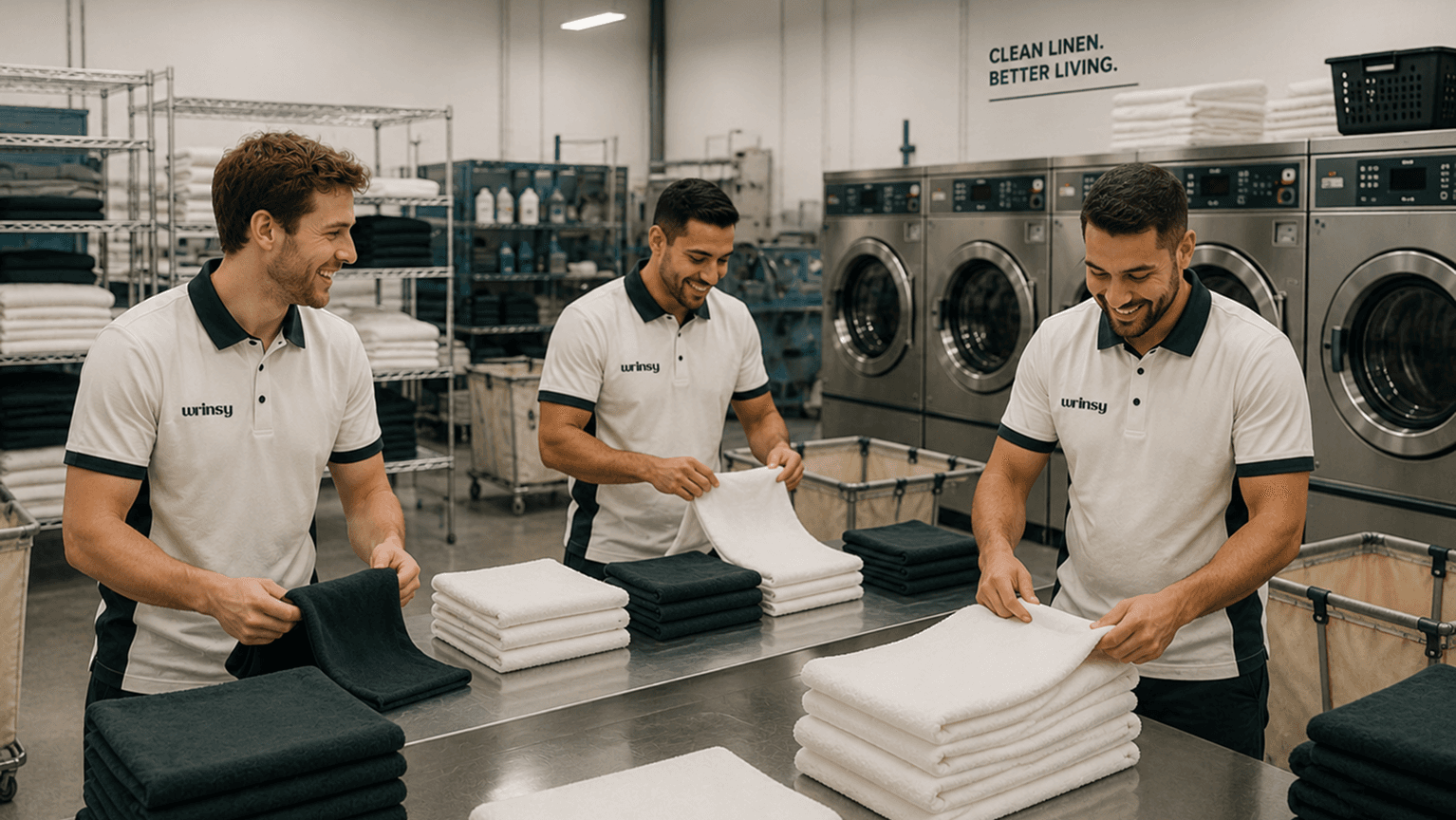
EQUIPMENT DOES NOT DELIVER CONSISTENCY. PEOPLE DO.
A facility can have the best equipment in the industry. If the people operating it are not trained, structured, and accountable, and if the process is not written down and enforced, the results will vary. In laundry, inconsistent results do not go unnoticed. Residents notice, and when residents notice, property managers do too.
This is the part of the operation most providers avoid discussing in detail, usually because there is not much structure behind it. High staff turnover and loosely defined responsibilities create inconsistency that eventually shows up in the resident experience. wrinsy is built differently. The staffing model, the role structure, the operating procedures, the training, and the supervisory oversight all point at one objective: the same standard of service for every resident, every time.
Every task is written down. Every role has clear accountability. Every team member is trained to follow established procedures, and every process is checked.
Consistency is not created by equipment. It is created by disciplined people doing proven work, day after day.
THE PEOPLE

EVERY PART OF THE PROCESS HAS AN OWNER.
Every person working on a wrinsy order is a wrinsy employee. Not a contractor, not a temporary placement, and not a gig worker dispatched from an app.
Roles are defined and operationally segmented, so nothing falls between them.
- Drivers, responsible for pickup and return, property access, and on-time execution
- Wash operators, responsible for cycle execution, settings, and processing consistency
- Folding staff, responsible for finishing, quality inspection, and packaging
- Supervisory personnel, providing active oversight across every shift rather than an end-of-day review
This structure exists because accountability requires clarity. When roles are defined, errors have an owner. When something goes wrong, it is addressed rather than absorbed into a loosely coordinated workforce where responsibility is diffuse.
THE PROCESS
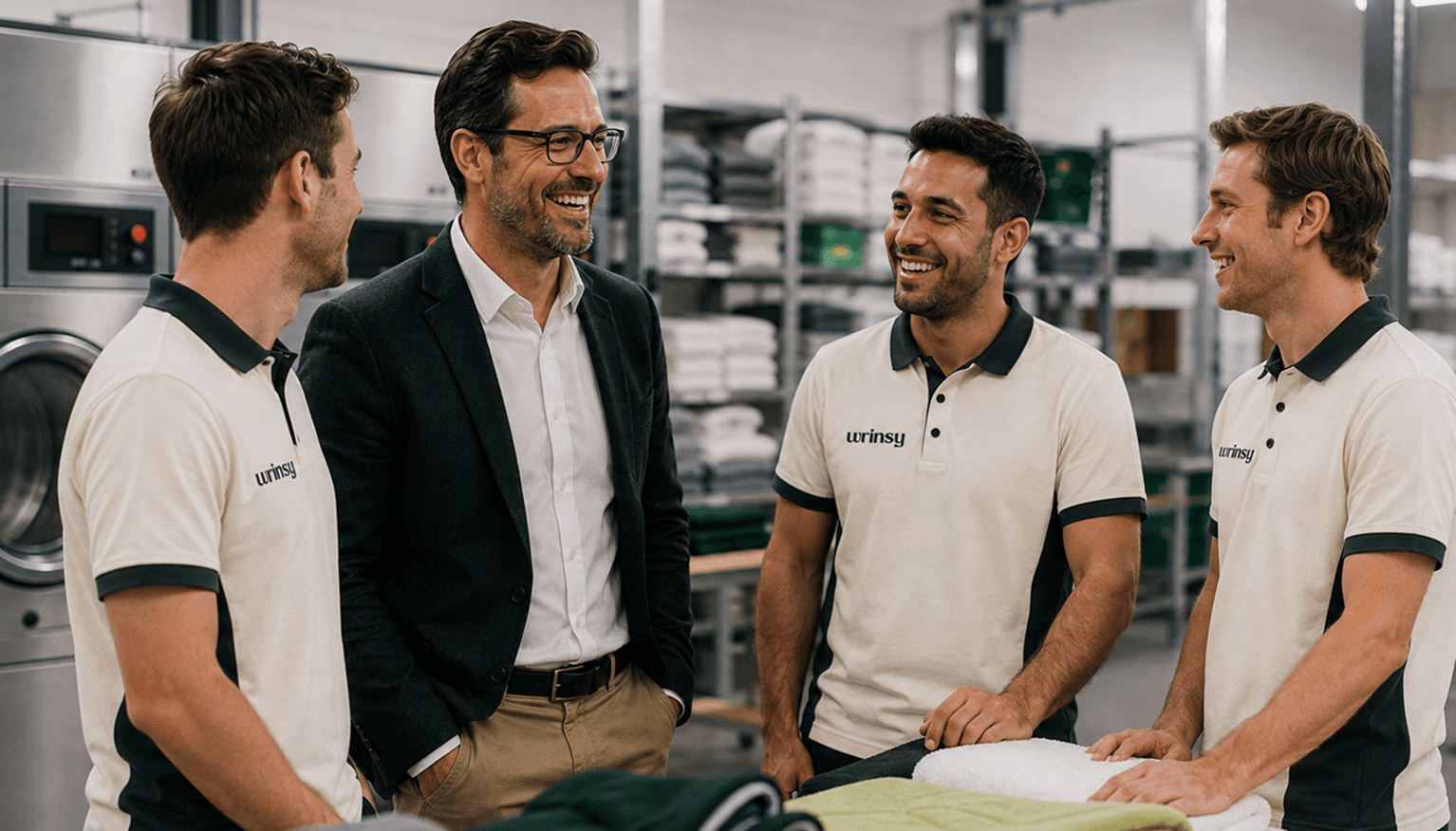
WRITTEN PROCEDURES THAT ACTUALLY GOVERN THE OPERATION
Every service wrinsy delivers is executed against documented Standard Operating Procedures. This is not a compliance formality. It is how consistency is enforced.
- Standardized handling from the moment a wrinsy bag is picked up to the moment it is returned
- Repeatable performance across shifts and staff, so a pickup handled on a Monday runs identically to one handled on a Friday
Turnaround times are managed on load planning and defined process flow, not on optimistic assumptions about what the day's volume will allow. For operations leaders judging whether a service will hold up over time, this is what holds it up.
THE OVERSIGHT
QUALITY CONTROL THAT HAPPENS DURING THE WORK, NOT AFTER IT
wrinsy maintains an active supervisory structure with leadership involvement throughout every operating day, including a Vice President of Operations, a Manager, and a Supervisor with defined oversight responsibilities across the facility.
- Quality checks run throughout the day, not at the end of a shift when issues are already in transit
- Oversight spans every stage, from equipment use and intake handling through processing and completion
- Issues are identified and addressed in real time, before they become a resident’s problem

All staff receive formal onboarding, documented process training, and equipment-specific instruction before they work an order independently. SOP adherence is not self-reported. It is supervised. For asset management, thinking about what it takes to offer a service at scale, this is the answer to the reliability question.
Not a promise. An oversight structure.
Related Resources
View allWHO IS WRINSY
Laundry infrastructure replaced with a fully managed service.
HOW WRINSY WORKS
A structured pickup and return service your staff never has to manage.
FINANCIAL IMPACT
What wrinsy does to NOI, CapEx, and reclaimed space, in plain numbers.